How to Choose the Right Outdoor Led Display for Your Business?
Choosing the right Outdoor LED Display for your business can be challenging. The decision impacts your visibility and customer engagement. Industry expert Simon Browne once stated, “The right display makes your brand unforgettable.” This reflects how crucial it is to select wisely.
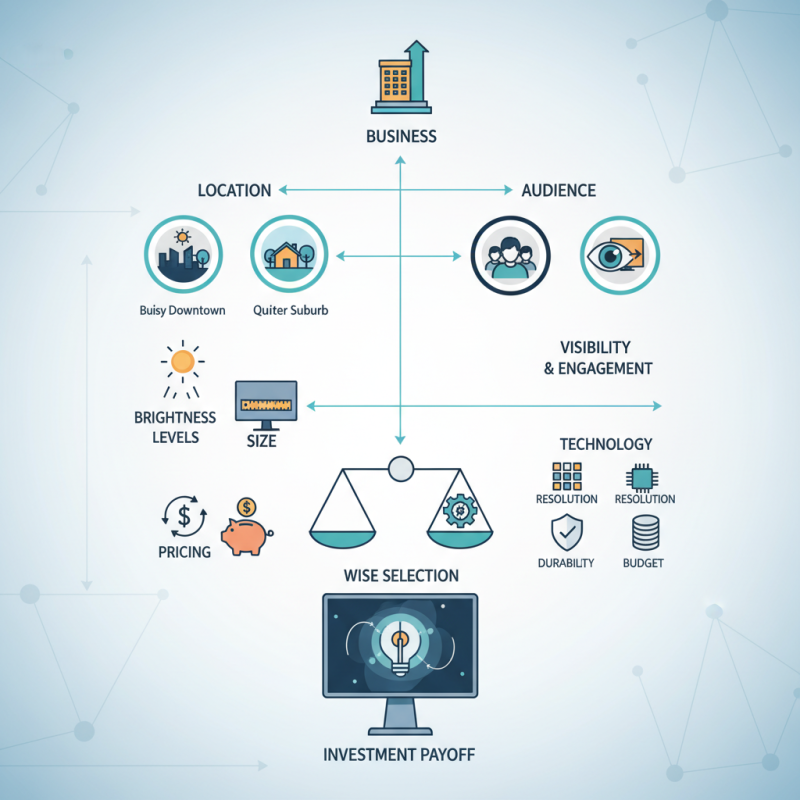
An Outdoor LED Display must meet specific needs. Consider the location and target audience. Will the display be in a busy downtown area or a quieter suburb? Each environment demands different brightness levels and sizes. Reflecting on these factors is essential for making the best choice.
Moreover, pricing and technology also come into play. Investing too little may yield poor results. However, overspending does not guarantee success either. Understanding your budget while assessing features like resolution and durability is vital. Take time to weigh these options carefully to ensure your investment pays off effectively.
Understanding the Different Types of Outdoor LED Displays and Their Uses
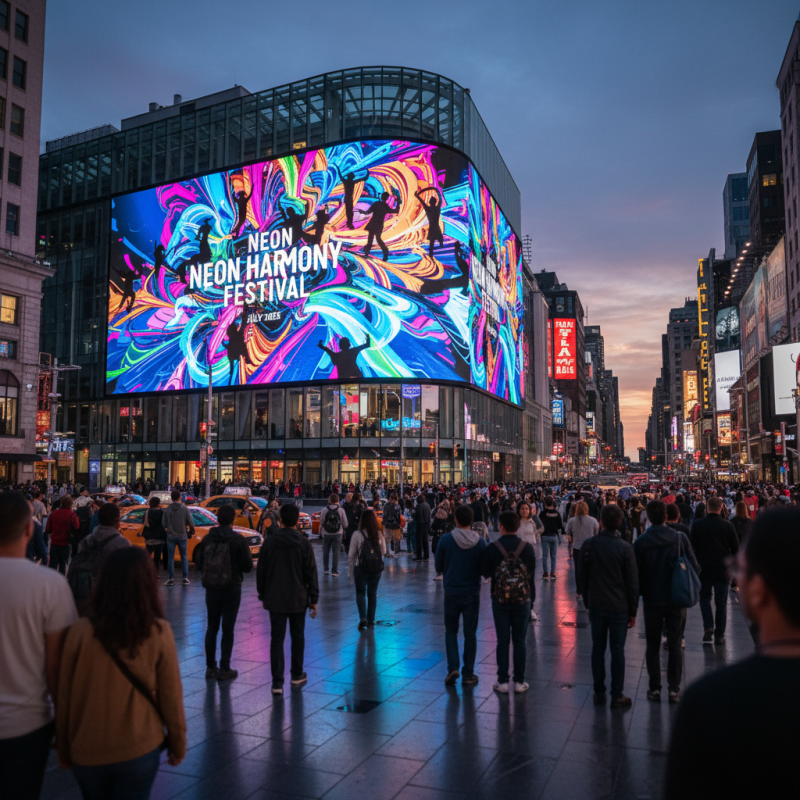
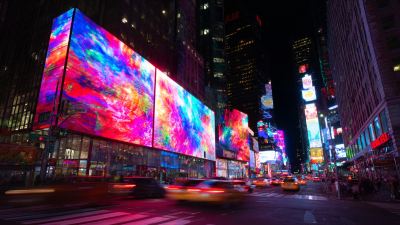
Choosing the right outdoor LED display requires understanding the various types available. LED displays can be categorized into several types, including full-color displays, monochrome displays, and RGB displays. Each type serves different purposes. For instance, full-color displays are ideal for businesses looking to attract attention. They present vibrant images and videos, making them suitable for entertainment venues.
Monochrome displays, on the other hand, are often used for less visual intensity, like public announcements. They can display text and basic graphics. A study from the Global Digital Out of Home Market reports that outdoor LED displays are increasing in adoption. Businesses report a boost in engagement by 47% after using bright, dynamic signage.
However, not all outdoor LED displays are suitable for every location. Factors like brightness, resolution, and audience distance must be considered. A report notes that roughly 35% of displays fail to meet the needs of their installation environment. A mismatch can lead to wasted investment. Determining the right type involves reflection on your audience's preferences and the specific goals of your advertising campaigns.
Evaluating Key Factors: Brightness, Resolution, and Viewing Distance
When choosing an outdoor LED display, three key factors should be at the forefront: brightness, resolution, and viewing distance. Brightness is crucial for visibility under varying sunlight conditions. Screens that are too dim will lose significant impact during the day. Aim for a higher brightness rating, ideally above 5,000 nits, to ensure your message stands out.
Resolution plays a vital role in the quality of the display. Higher resolution allows for finer details. If you plan to showcase images or text up close, a lower pixel pitch is essential. However, higher resolution displays can come with a heavier cost. Finding the right balance to fit your budget is sometimes challenging, yet necessary.
Viewing distance cannot be overlooked. The farther away your audience will be, the lower the required resolution. A common mistake is selecting a display with an unnecessarily high resolution for distant viewing. This may lead to wasted funds while not significantly improving audience engagement. Always evaluate where the majority of your viewers will be situated before making a decision. Balancing these factors is not easy, but careful consideration will yield better results.
Brightness and Resolution Comparison for Outdoor LED Displays
Comparing Cost-Effectiveness: Initial Investment vs. Long-Term Benefits
Choosing the right outdoor LED display can be a tough decision. One of the main factors to consider is the cost-effectiveness. Initial investment matters, but so do long-term benefits. A display may have a higher upfront cost, but savings can emerge over time. Think about maintenance and energy efficiency. Some models consume less power and last longer.
Long-lasting displays may reduce replacement costs and operational downtime. While cheaper options seem appealing, they often require more frequent repairs. This can lead to hidden expenses. Business owners should evaluate the total cost of ownership. It's important to ask questions about warranty and support.
Reflect on your business needs. A display that fits your brand can attract more customers. Make a choice that aligns with your vision. Be cautious of overspending on flashy features that won't be used. Watch for potential issues and weigh all aspects. Be realistic about your budget and expectations.
Assessing Environmental Considerations: Weather Resistance and Maintenance
When choosing an outdoor LED display, environmental considerations are crucial. Weather resistance is one of the main factors. Displays must withstand rain, snow, and intense sunlight. Not all displays are created equal in this regard. Some may fade under bright conditions, while others could malfunction in heavy rain. Testing in diverse weather scenarios is essential for reliability.
Maintenance is another area to think about. Outdoor displays require regular checks for functionality. Dust and debris can hinder performance, leading to potential dark spots. Choosing a model that allows for easy cleaning and repairs can save time and effort. Accessibility matters, too. If an installation is difficult to reach, maintenance may be delayed.
It’s tempting to ignore these factors when making a choice. The glossy advertisements can be misleading. Companies may promise durability without backing it up. It’s wise to ask for specifications and real-world performance examples. In the end, patience and thorough investigation lead to better choices. Your investment deserves careful thought, especially in unpredictable environments.
How to Choose the Right Outdoor LED Display for Your Business? - Assessing Environmental Considerations: Weather Resistance and Maintenance
| Feature |
Description |
Importance |
| Weather Resistance |
Ability to withstand rain, snow, and extreme temperatures. |
High |
| IP Rating |
Ingress Protection rating that indicates dust and moisture resistance. |
Critical |
| UV Resistance |
Protection against UV rays to prevent color fading. |
Medium |
| Temperature Range |
Operating temperatures the display can function within. |
High |
| Maintenance Requirements |
Frequency and type of maintenance needed to keep the display operational. |
Medium |
| Viewing Angle |
The range of angles from which the display can be viewed clearly. |
High |
| Brightness |
Lumens rating ensuring visibility in various lighting conditions. |
Critical |
Analyzing Audience Engagement: Measuring Impact and Effectiveness of Displays
Audience engagement is key for effective outdoor LED displays. Research shows that digital signage can boost audience recall by 83%. This highlights the importance of visually appealing content. The right choice of display can attract more foot traffic. A well-placed, dynamic display can draw attention for longer periods, increasing potential customer interaction.
However, measuring effectiveness remains a challenge. Many businesses struggle to gather audience data. Surveys and analytics tools can help, but they require time and effort. It's essential to analyze audience demographics. Knowing who watches can refine the messaging. Studies indicate targeted displays can improve engagement rates by up to 40%. Yet, businesses must be proactive in collecting this data.
Content also plays a significant role. Simple, clear messages often resonate better. However, brands should not overlook creativity. Eye-catching designs can elevate engagement, but overcomplicated visuals may distract. It's a balance that needs constant adjustment. Regularly reviewing the display’s performance is crucial to ensuring its impact.