How to Choose the Right Outdoor Led Display for Your Needs?
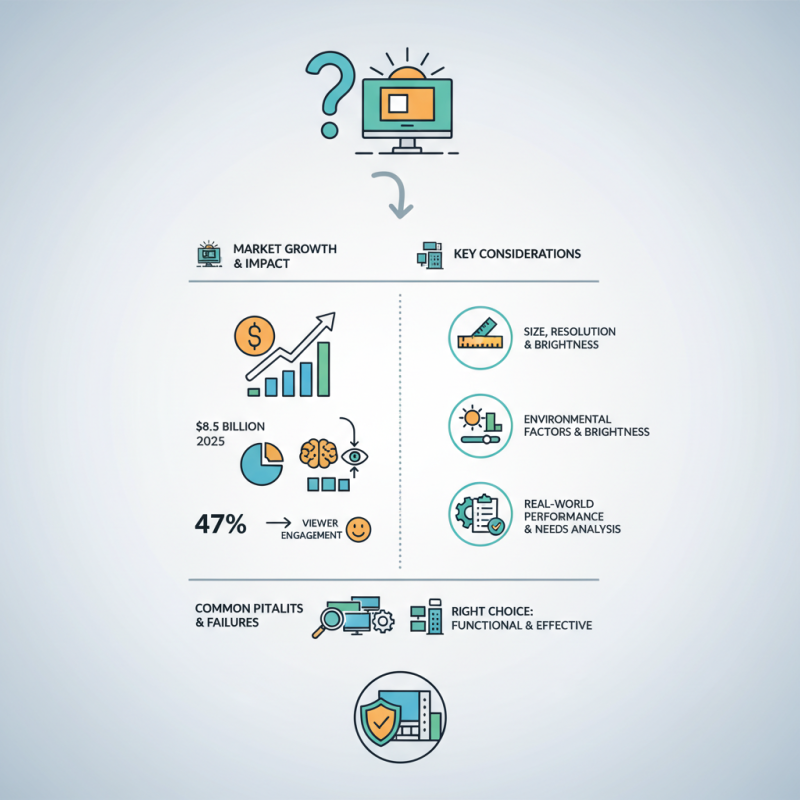
Choosing the right Outdoor LED Display is crucial for any business looking to stand out. The global outdoor LED display market is expected to grow significantly, projected to reach $8.5 billion by 2025. This growth is driven by increased demand for advertising and public information dissemination.
When it comes to selecting the right display, several factors must be considered. Outdoor LED displays come in various sizes, resolutions, and brightness levels, tailored for different environments. For instance, a display in a busy urban area will require higher brightness than one in a shaded location. Research indicates that a clear and vibrant display can increase viewer engagement by up to 47%.
However, it’s easy to get overwhelmed by options. Not all displays are created equal. Manufacturers often emphasize specifications without addressing real-world performance. Understanding your specific needs is essential, and it’s beneficial to analyze past install failures. The right Outdoor LED Display shouldn’t just look good; it should also function effectively in its intended environment.
Understanding the Basics of Outdoor LED Displays
Outdoor LED displays have transformed how we communicate visually. They offer bright, vibrant images that capture attention. Understanding the basics is crucial in choosing the right one.
Consider the pixel pitch, which determines the display's resolution. A smaller pitch means clearer images, but might cost more.
Also, think about the display's brightness. It should be high enough for sunlight visibility. Look for at least 5000 nits for optimal performance outdoors.
Weather resistance is another key factor. Displays with a high IP rating resist rain and dust effectively.
Finally, consider the installation and maintenance needs. Outdoor displays require sturdy structures due to their size. Regular maintenance is essential, even if it's a hassle.
Sometimes, you'll find that getting the setup perfect takes time and patience. Exploring options and understanding your environment will guide your decision.
Evaluating Key Features of LED Display Technology
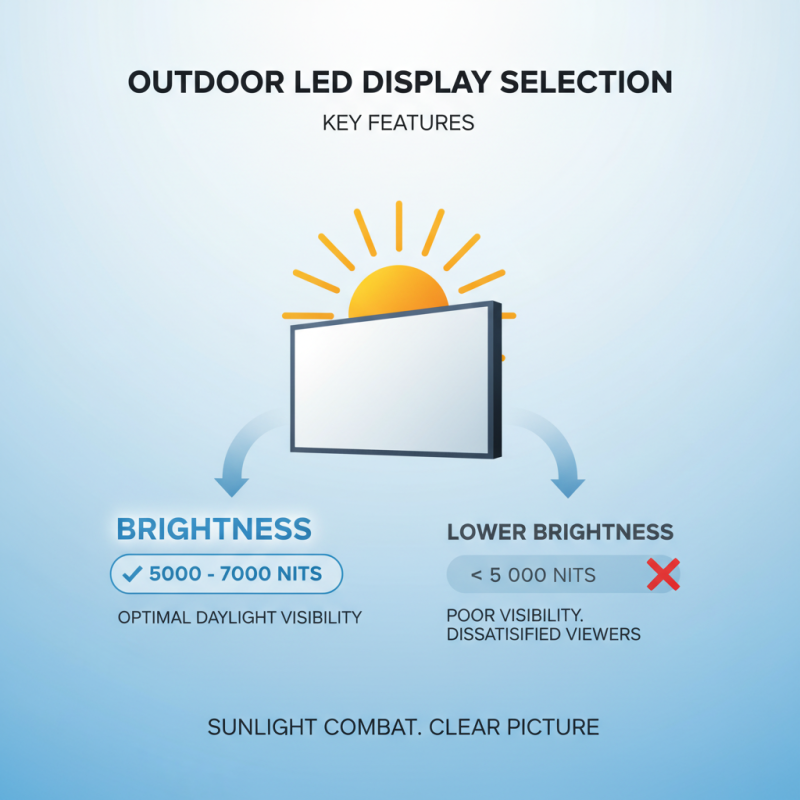
When selecting an outdoor LED display, evaluating key features is crucial. Brightness is one of the most critical elements. Outdoor displays need to be bright enough to combat sunlight. A brightness level of 5000 to 7000 nits is optimal for clear visibility in daylight. According to industry reports, displays with lower brightness often lead to poor visibility and dissatisfied viewers.
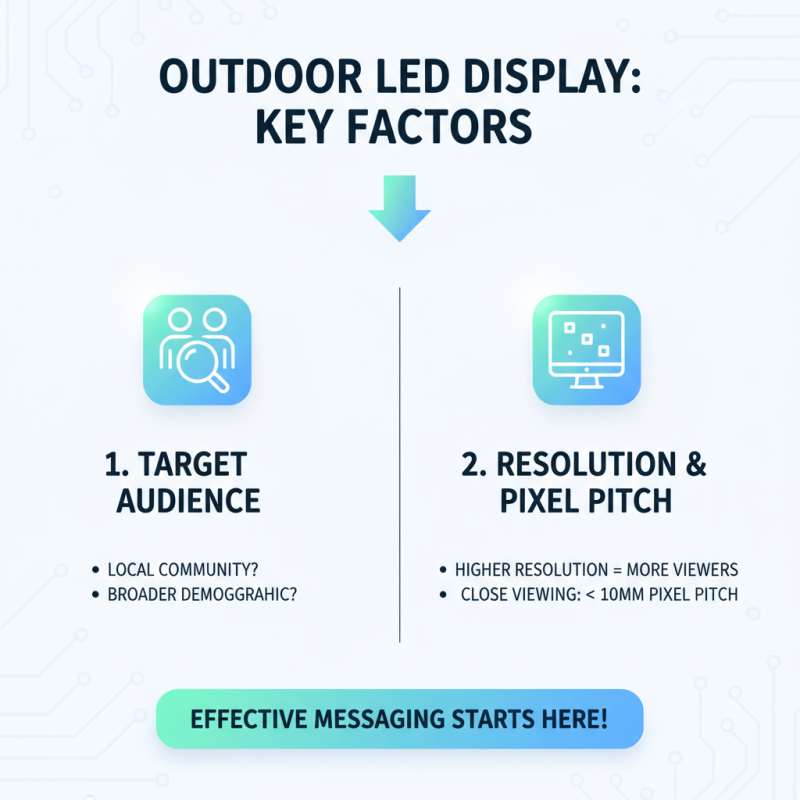
Another important feature is pixel pitch. This defines the distance between pixels. Smaller pixel pitch provides higher resolution, resulting in clearer images. Displays with a pixel pitch of 10mm or less are ideal for close viewing situations. However, opting for smaller pixel pitches increases costs and may not be necessary for all applications. It's essential to balance resolution needs with budget constraints.
In terms of durability, weather resistance is key. Look for displays rated IP65 or higher. These ratings ensure protection against dust and water. However, even with high ratings, ongoing maintenance is necessary. Regular checks can prevent damage and prolong the display's lifespan. Not addressing these needs can lead to costly repairs later.
Comparing Different Types of Outdoor LED Displays
Choosing the right outdoor LED display requires understanding the differences in types. Several options exist, from fixed installations to mobile solutions. According to industry studies, fixed LED displays dominate the market, making up 70% of outdoor installations. These screens offer high visibility and durability.
Mobile LED displays are gaining traction. They are versatile and can be relocated easily. Reports show their use increased by 15% last year. These displays are ideal for events but may lack the robustness of fixed displays. The contrast in brightness and resolution can affect quality. Fixed displays often exceed 6,000 nits, while mobile options usually provide around 3,500 nits.
Consider your needs carefully. Smaller screens might waste opportunities in large spaces. However, oversizing a screen can lead to wasted resources. Research indicates a trend towards high-resolution displays. These provide clearer images and better audience engagement. Still, higher resolution means increased costs. Weigh the benefits against the budget restrictions for an informed decision.
How to Choose the Right Outdoor LED Display for Your Needs?
| Type of Outdoor LED Display |
Pixel Pitch (mm) |
Brightness (nits) |
Refresh Rate (Hz) |
Typical Applications |
| SMD LED Display |
3.9 |
6000 |
1920 |
Advertising, Events, Sports |
| DIP LED Display |
10 |
5000 |
1600 |
Traffic Signs, Billboards |
| Fixed LED Display |
6 |
7000 |
1920 |
Facades, Retail Stores |
| Mobile LED Display |
5 |
8000 |
2400 |
Outdoor Events, Concerts |
Budget Considerations for Outdoor LED Displays
When considering an outdoor LED display, budget plays a crucial role. Prices can range widely based on size, resolution, and features. High-resolution displays, for instance, attract higher costs. A smaller display might fit your budget to start. But, you may need to compromise on size or clarity.
Assessing your location is vital. Outdoor conditions can impact durability and maintenance costs. Weatherproof models tend to be pricier but may save money in repairs. Think about installation too. Hiring professionals costs extra but can prevent costly mistakes. Do you need special features like animation or interactive capabilities? These can significantly inflate the price.
Consider future growth. Investing in a flexible display system can be wise. You might not need the highest specs now, but consider your long-term plans. Skimping on quality can lead to frustrations down the line. Does the display fit seamlessly into your overall marketing strategy? Every dollar spent should contribute to your broader goals. Reflect on what truly matters for your audience.
Budget Considerations for Outdoor LED Displays